The string2path R package converts a text to paths of the outlines of each glyph, based on a font data. Under the hood, this package is powered by the savvy framework to use these two Rust crates:
-
ttf-parser for parsing font data. TrueType font (
.ttf) and OpenType font (.otf) are supported. - lyon for tessellation of polygons and flattening the curves.
Installation
install.packages("string2path")Development version
The development version is available on R-universe:
install.packages("string2path",
  repos = c(
    yutannihilation = "https://yutannihilation.r-universe.dev",
    CRAN = "https://cloud.r-project.org"
  )
)
If you want to install from source, you need to have Rust toolchain installed before trying to install this package. See https://rust-lang.org/tools/install/ for the installation instructions.
Example
string2path()
library(string2path)
library(ggplot2)

d <- string2path("カラテが\n高まる。", "Noto Sans JP", font_weight = "bold")
d <- tibble::rowid_to_column(d)

ggplot(d) +
  geom_path(
    aes(x, y, group = path_id, colour = factor(glyph_id)),
    linewidth = 1.5
  ) +
  theme_minimal() +
  coord_equal() +
  theme(legend.position = "top") +
  scale_colour_viridis_d(option = "H")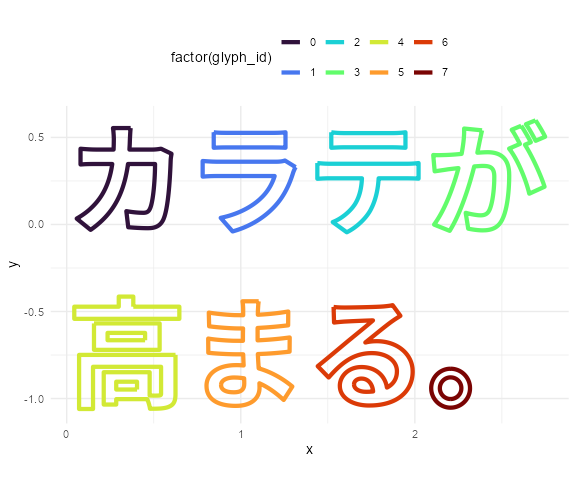
library(gganimate)
d <- string2path("蹴", "Noto Sans JP")
d <- tibble::rowid_to_column(d)

ggplot(d) +
  geom_path(
    aes(x, y, group = path_id),
    linewidth = 2,
    colour = "purple2",
    lineend = "round"
  ) +
  theme_minimal() +
  coord_equal() +
  transition_reveal(rowid)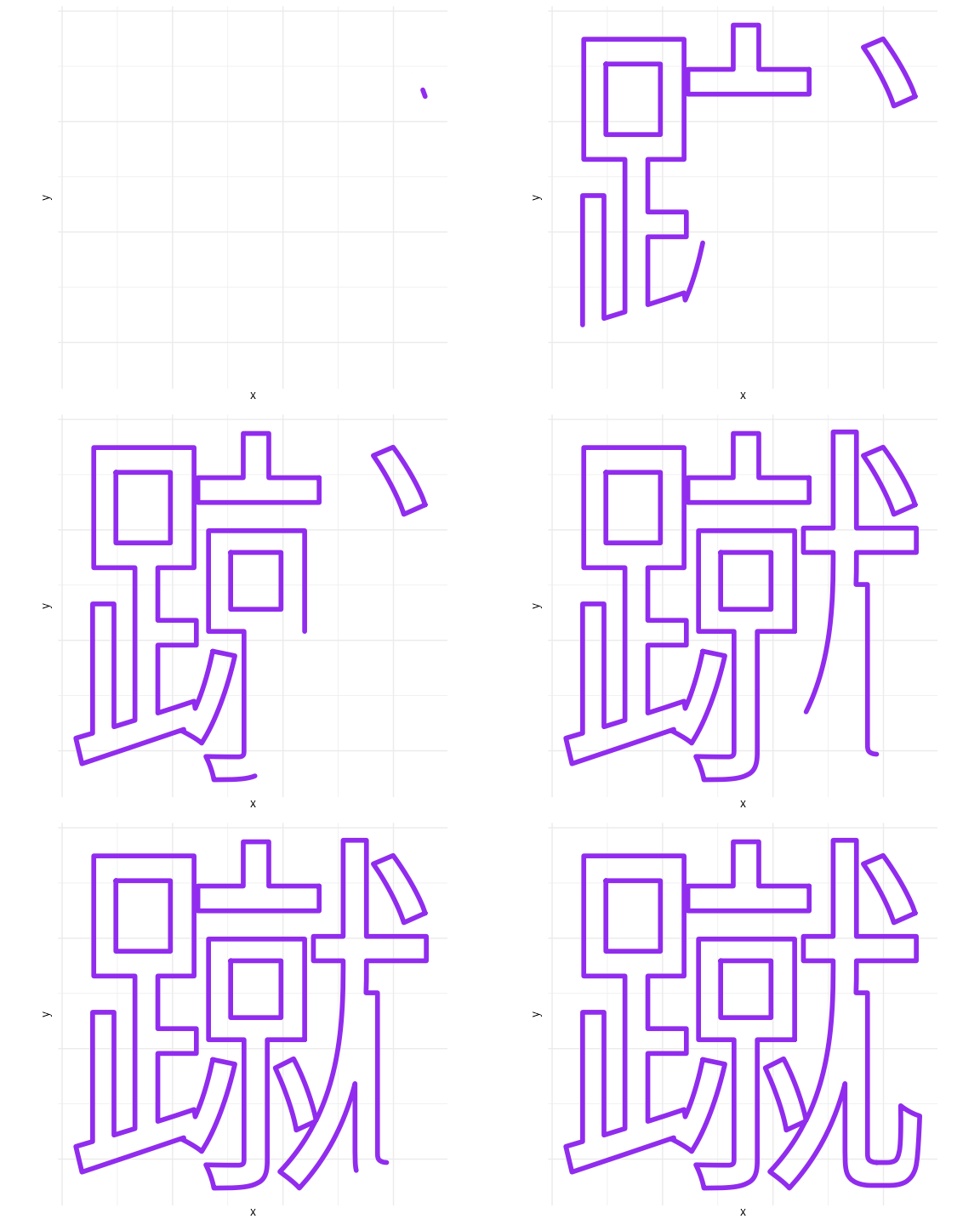
dump_fontdb()
Note that "Noto Sans JP" above (and "Iosevka" below) is the font installed on my local machine, so the same code might not run on your environment. You can use dump_fontdb() to see the available combination of font family (e.g. "Arial"), weight (e.g. "bold"), and style (e.g. "italic").
dump_fontdb()
#> # A tibble: 479 × 4
#>    index family           weight style
#>    <int> <chr>             <dbl> <chr>
#>  1     0 Arial               400 normal
#>  2     0 Arial               400 italic
#>  3     0 Arial               700 normal
#>  4     0 Arial               700 italic
#>  5     0 Arial               900 normal
#>  6     0 Sitka Subheading    400 normal
#>  7     0 Sitka Subheading    400 italic
#>  8     0 等线                300 normal
#>  9     0 等线                400 normal
#> 10     0 等线                700 normal
#> # ℹ 469 more rows
You can also specify the font file directly. Pomicons is a font available on gabrielelana/pomicons, licensed under SIL OFL 1.1.
pomicons_file <- here::here("fonts", "Pomicons.ttf")
if (!file.exists(pomicons_file)) {
  dir.create(dirname(pomicons_file))
  curl::curl_download(
    "https://github.com/gabrielelana/pomicons/blob/master/fonts/Pomicons.ttf?raw=true",
    destfile = pomicons_file
  )
}

d_tmp <- string2path("\uE007", pomicons_file)

ggplot(d_tmp) +
  geom_path(aes(x, y, group = path_id), linewidth = 5, colour = "#26d1a9") +
  theme_minimal() +
  coord_equal()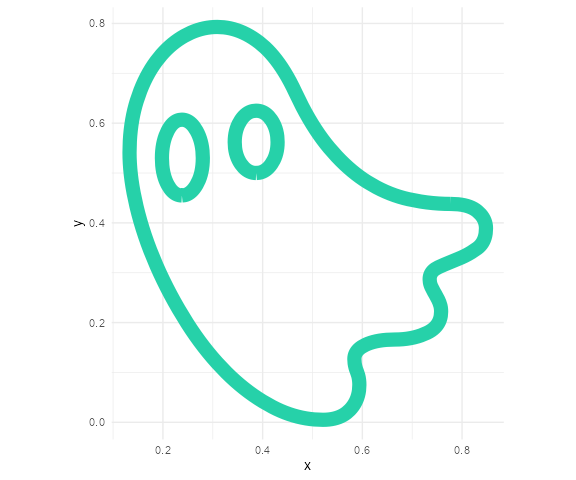
string2fill()
d <- string2fill(
  "abc",
  "Iosevka",
  font_weight = "bold",
  font_style = "italic"
)

ggplot(d) +
  geom_polygon(
    aes(x, y, group = triangle_id, fill = factor(triangle_id %% 7)),
    colour = "grey",
    linewidth = 0.1
  ) +
  theme_minimal() +
  coord_equal() +
  theme(legend.position = "none") +
  scale_fill_viridis_d(option = "H")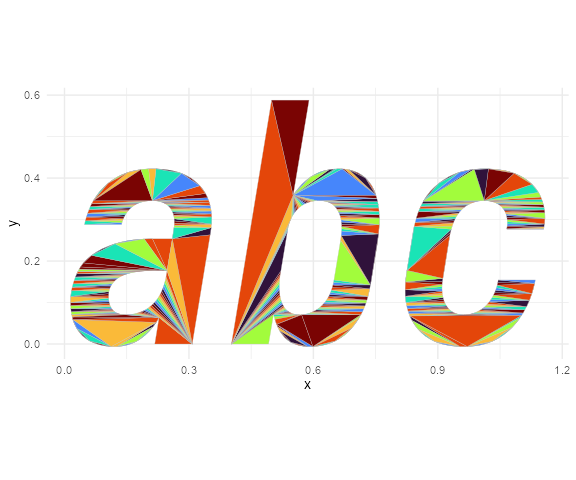
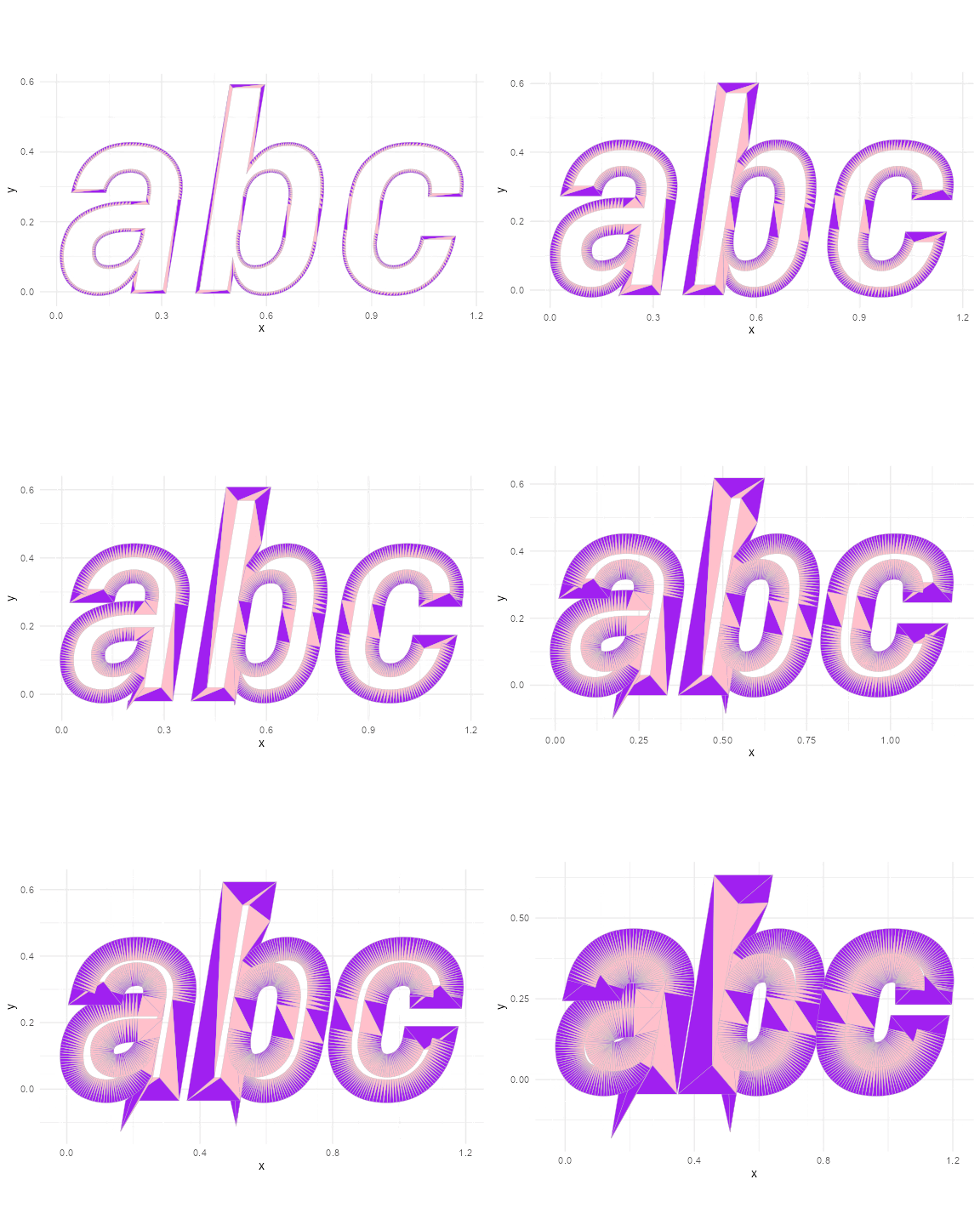
string2stroke()
for (w in 1:9 * 0.01) {
  d <- string2stroke(
    "abc",
    "Iosevka",
    font_weight = "bold",
    font_style = "italic",
    line_width = w
  )

  p <- ggplot(d) +
    geom_polygon(
      aes(x, y, group = triangle_id, fill = factor(triangle_id %% 2)),
      colour = "grey",
      linewidth = 0.1
    ) +
    theme_minimal() +
    coord_equal() +
    theme(legend.position = "none") +
    scale_fill_manual(values = c("purple", "pink"))
  plot(p)
}
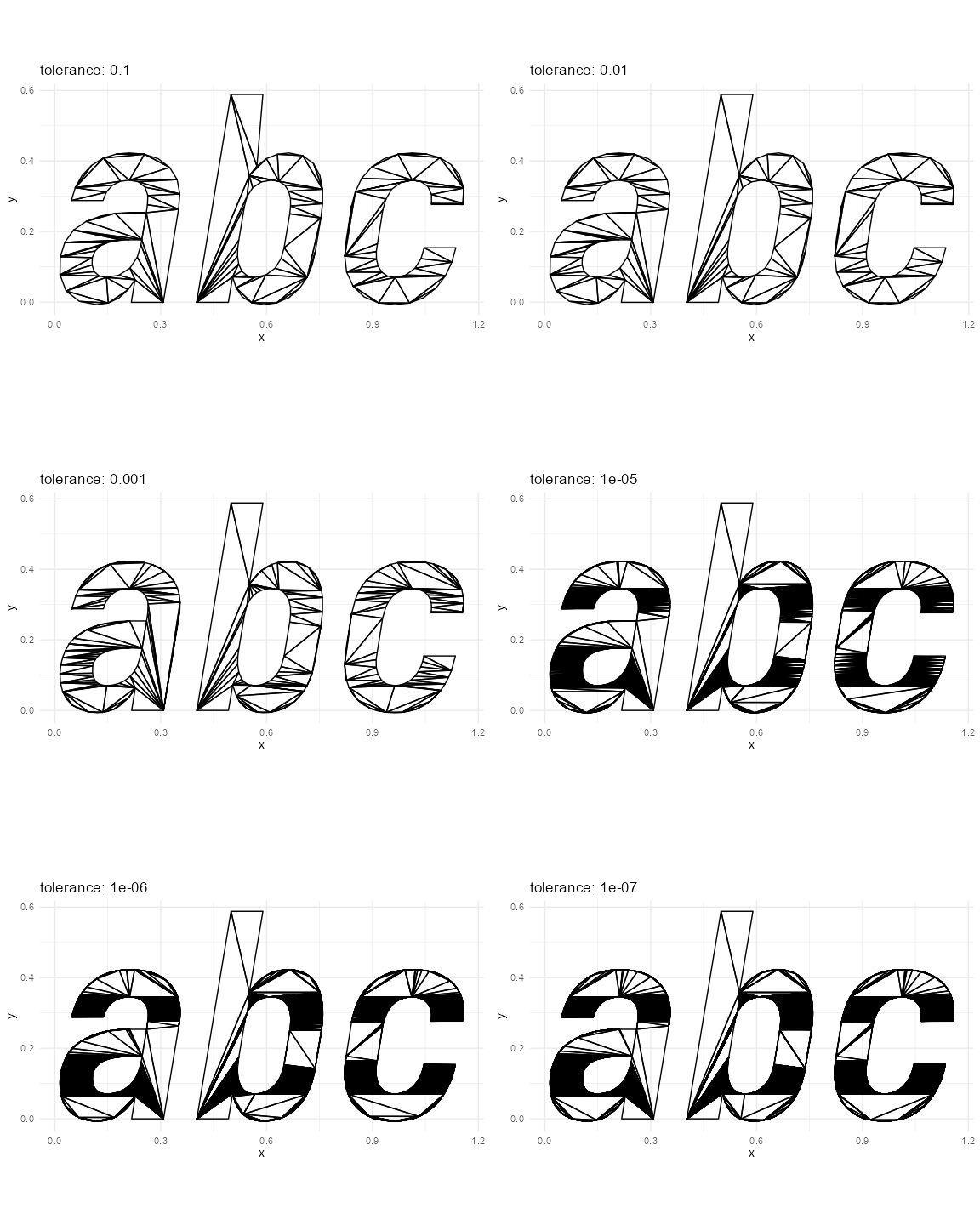
tolerance
tolerance controls resolution of the tessellation. You can reduce tolerance to get higher resolutions. In most of the cases, 1e-5 ~ 1e-6 should be enough. For more details, please refer to lyon’s official document.
for (tolerance in c(1e-1, 1e-2, 1e-3, 1e-4, 1e-5, 1e-6, 1e-7)) {
  d <- string2fill(
    "abc",
    "Iosevka",
    font_weight = "bold",
    font_style = "italic",
    tolerance = tolerance
  )

  p <- ggplot(d) +
    geom_polygon(
      aes(x, y, group = triangle_id),
      fill = "transparent",
      colour = "black",
      linewidth = 0.5
    ) +
    theme_minimal() +
    coord_equal() +
    ggtitle(paste0("tolerance: ", tolerance))
  plot(p)
}